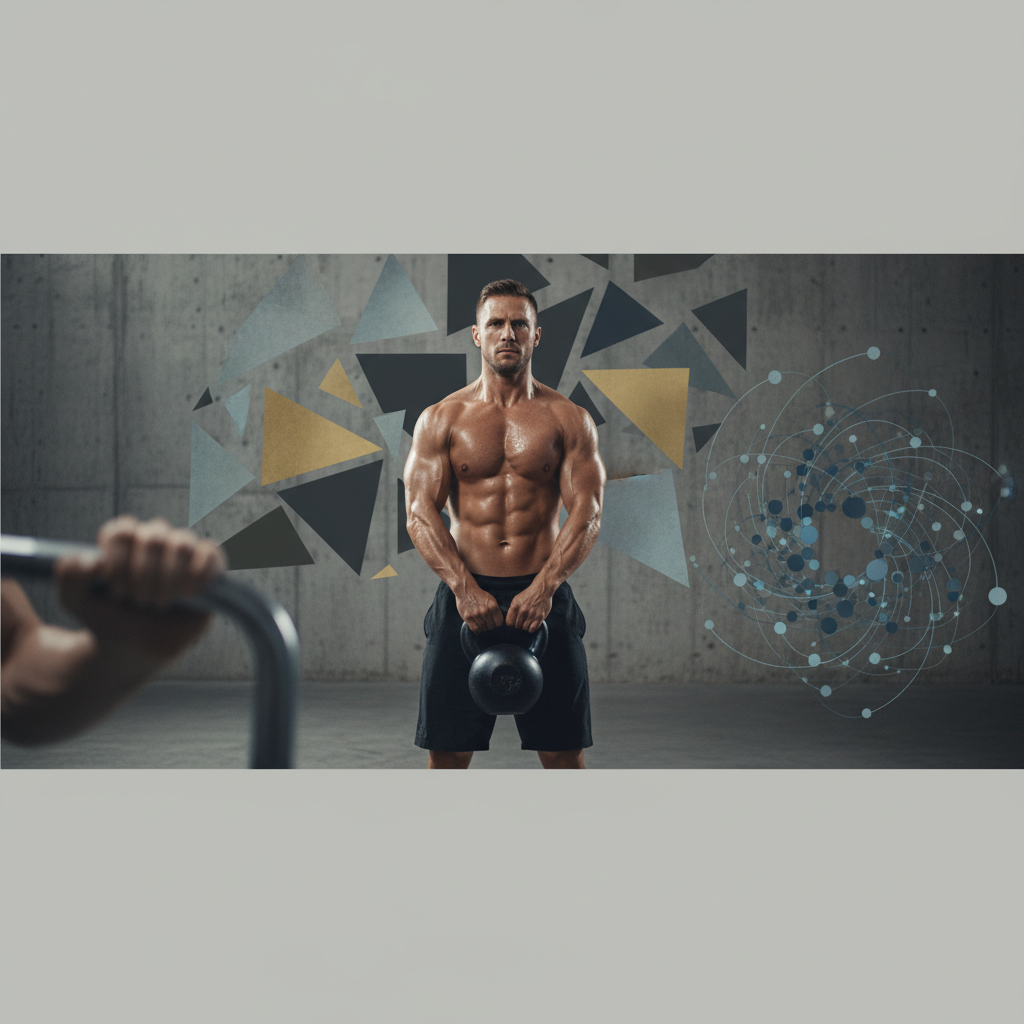
A direct, high-impact guide on building self-confidence through physical discipline rather than just mindset work. Ideal for readers looking to replace "self-help" platitudes with "operator-grade" physical training tactics that forge mental toughness.
The Kinetic Confidence Framework: Building Certainty Through Physical Stress
Most people try to "think" their way into self-confidence. They read affirmations, stare in the mirror, and try to convince their brain that they are capable. This is a bottom-up failure. True, unshakeable confidence is not a psychological state; it is a physiological byproduct. Use the Kinetic Confidence Framework to stop negotiating with your internal critic and start building a body that knows it cannot be broken.
When you master your physical vessel, your mind has no choice but to follow. If you can handle a grueling session of heavy carries or a high-intensity endurance block, the "stress" of a boardroom presentation or a difficult conversation becomes statistically insignificant. Here is how you engineer supreme confidence through calculated physical strain.
The Rule of Voluntary Hardship
To reach a state of supreme self-mastery, you must stop seeking comfort. Comfort is the graveyard of discipline. The Rule of Voluntary Hardship dictates that you must choose the difficult path in your training to inoculate yourself against the stresses of life.
This isn't about "getting a sweat on." This is about intentionality. When you choose to perform three more reps when your lungs are screaming, or when you opt for the weighted rucksack on a steep incline instead of a flat stroll, you are sending a signal to your nervous system. You are teaching your brain that you are the type of person who stays when others leave. This builds "competence equity." Every completed session of voluntary hardship is a deposit into your bank of self-belief. By the time you face a real-world crisis, your vault is full.
Objective Metrics vs. Emotional Narratives
One of the greatest enemies of self-confidence is the emotional narrative. We tell ourselves we "aren't good enough" or that we "don't have what it takes." You cannot argue with feelings using more feelings. You argue with feelings using data.
In the Leader Supreme philosophy, your training log is your evidence locker. When you can look at a notebook and see that you have increased your deadlift by 50 pounds or shaved two minutes off your five-mile run, your brain can no longer lie to you. You have objective proof of growth. To implement this today:
1. Track everything. If it isn't measured, it didn't happen.
2. Focus on "Power Peaks." Identify one physical metric you will dominate each month.
3. Audit the evidence. Look at your progress weekly. Let the numbers silence the doubt.
The "Biological Anchor" Technique
Mental toughness often wavers when the environment becomes chaotic. To remain supreme, you must learn to anchor your mind to your physical state. We use a technique called the Biological Anchor. This involves using physical cues—specifically breath control and posture—to force a shift in mental state.
During your highest intensity training sessions, practice "Box Breathing" (4 seconds in, 4 seconds hold, 4 seconds out, 4 seconds hold) while under load. If you can control your heart rate while holding a heavy sandbag, you can control your heart rate when a deadline is looming. Stand tall, keep your chin level, and occupy your space. This isn't posturing; it is a neurological hack. A collapsed posture signals a defeated mind. An upright, expansive posture signals a leader.
Embracing the "Micro-Failure"
To become unshakeable, you must lose your fear of failure. In the gym, we call this training to failure. When you push a set until your muscles physically cannot complete another rep, you encounter a "Micro-Failure."
The beauty of the Micro-Failure is that it proves life goes on. You dropped the weight? Reset. You missed the PR? Re-evaluate and come back tomorrow. By intentionally finding your physical limit, you realize that "failing" is simply a data point, not a destination. This carries over into your career and personal life. You become bolder because you have survived physical failure a thousand times over in the squat rack. You are no longer afraid of the "no" because you have mastered the "no" of your own muscles.
Conclusion: The Physical Path to Mental Sovereignty
Confidence isn't something you find; it’s something you build with your bare hands. By applying the Kinetic Confidence Framework—seeking voluntary hardship, tracking objective metrics, using biological anchors, and embracing micro-failures—you transform from someone who hopes they are capable into someone who knows they are supreme.
The work starts the moment you stop talking and start moving. Pick up the weight. Run the extra mile. Refuse the easy exit. Your supreme self is waiting on the other side of the work. Go get it.