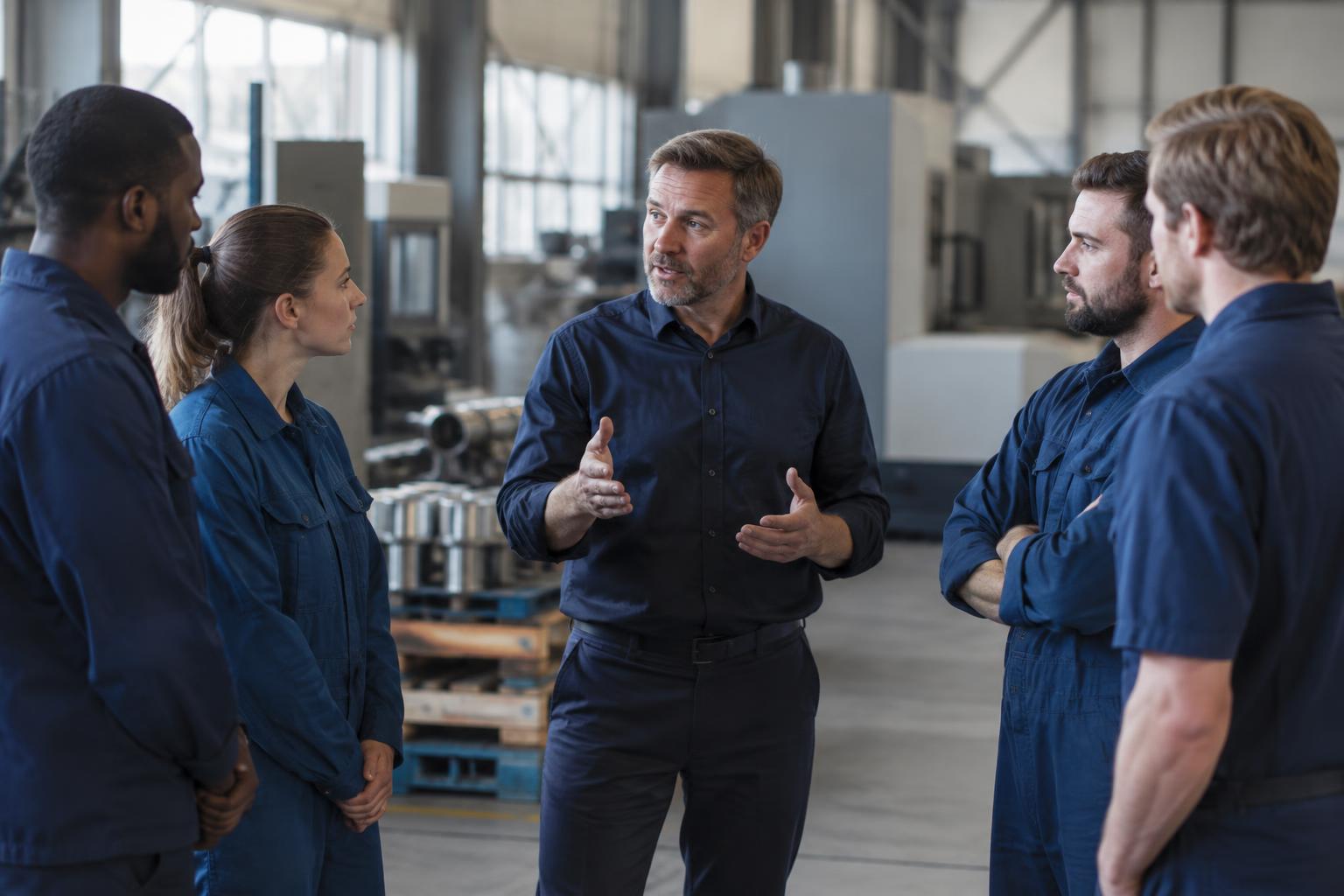
Learn how tailored leadership training boosts productivity, safety, and ROI for mid‑size manufacturers. Get a step‑by‑step design roadmap and choose the ri
Introduction
Mid‑size manufacturers sit at a crossroads where operational efficiency, safety compliance, and talent retention intersect. Unlike large conglomerates, they lack deep‑pocketed HR departments, yet they also cannot afford generic, one‑size‑fits‑all leadership programs that ignore shop‑floor realities. Customized leadership development training for manufacturing firms fills this gap by aligning leadership skills with production schedules, safety protocols, and growth targets. In this 2026 guide, we’ll explore why personalization matters, outline a proven program framework, and show how to measure real ROI.
Why Customized Leadership Development Matters for Mid‑Size Manufacturers
Industry‑specific skill gaps
- Technical fluency: Leaders must understand CNC machines, robotics, and IoT sensors to make informed decisions.
- Lean & Six Sigma proficiency: Without hands‑on experience, improvement initiatives stall.
- Safety leadership: Knowing OSHA standards and how to embed safety culture is non‑negotiable.
Impact on productivity and safety
When leaders speak the language of the shop floor, they can:
- Reduce downtime by 15‑20% through quicker troubleshoot decisions.
- Lower recordable incident rates by 10‑12% by modeling safe work practices.
- Align teams with continuous‑improvement goals, driving a consistent 5‑7% productivity lift.
Retention and talent pipeline
A clear development path keeps high‑potential supervisors from leaving for bigger plants. Customized programs signal commitment, boosting employee engagement scores by 8‑10 points and shortening the time‑to‑fill for key roles.
Core Components of a Tailored Leadership Development Program
Competency framework for manufacturing leaders
A manufacturing leadership competency framework maps technical know‑how, people‑management, and strategic thinking. Typical clusters include:
- Operations Insight
- Safety & Compliance
- Lean Mindset
- People Development
- Digital Literacy
Blended learning (classroom, on‑the‑job, digital)
- Classroom sessions for theory (e.g., risk‑based decision making).
- On‑the‑job labs where participants lead a real process improvement.
- Digital micro‑learning modules for just‑in‑time reinforcement.
Coaching and mentorship
Pair emerging leaders with senior supervisors who can model behavior and provide real‑time feedback. Coaching cycles of 3‑6 months have shown a 30 % increase in leadership confidence scores.
Performance‑based assessments
Use 360‑degree surveys, simulation exercises, and KPI dashboards to gauge skill transfer. Results feed into the Leadership Development ROI Calculator for transparent reporting.
Designing the Program
- Conducting a needs analysis – Survey floor managers, review safety incident logs, and map existing skill inventories.
- Mapping curriculum to strategic goals – Align each module with the plant’s annual production targets, quality metrics, and sustainability objectives.
- Choosing delivery formats – Decide on in‑person workshops for hands‑on drills, virtual webinars for theory, or a hybrid mix that respects shift patterns.
- Customizing content for shop‑floor vs. office leaders – Shop‑floor modules focus on line‑level problem solving; office leaders receive training on cross‑functional coordination and digital workflow tools.
Design Checklist
- [ ] Stakeholder alignment (HR, operations, safety)
- [ ] Skills gap matrix completed
- [ ] Learning objectives tied to KPIs
- [ ] Delivery schedule synced with production cycles
- [ ] Budget approved and ROI forecasting documented
Implementation Best Practices
Pilot testing and feedback loops
Start with a single department, collect quantitative (KPIs) and qualitative (surveys) data, then iterate before full rollout.
Scheduling around production cycles
Avoid peak production weeks. Offer multiple session times to accommodate 1st, 2nd, and 3rd shifts.
Engaging senior leadership as sponsors
Executive sponsors champion the program, allocate resources, and publicly recognize participant milestones.
Integrating with existing HR systems
Link training records to performance reviews and succession plans within your HRIS to streamline talent analytics.
Measuring ROI and Impact
Key performance indicators (KPIs) for leadership training
- Production uptime (% increase)
- Safety incident frequency rate
- Employee turnover rate
- Time‑to‑competency for new supervisors
- Cost‑per‑leadership‑development hour
Pre‑ and post‑assessment methods
Deploy a baseline 360‑survey and skill test before the program, then repeat at 3‑month and 12‑month marks to capture growth.
Linking leadership metrics to financial outcomes
Translate a 5 % productivity gain into dollar terms (e.g., $2.4 M annual uplift for a plant with $48 M output). Combine safety reduction savings and turnover cost avoidance for a comprehensive ROI figure.
Using the Leadership Development ROI Calculator
Our Leadership Development ROI Calculator lets you input pre‑ and post‑KPIs to generate a clear return‑on‑investment percentage—essential for board‑level approval.
Case Study: Organizational Behavior Change Program for Manufacturing Firms
In 2026, Leader Supreme delivered an Organizational Behavior Change Program for Manufacturing Firms that tackled cultural resistance to continuous improvement. Over 12 months, the client realized:
- A 14 % reduction in unplanned downtime
- 18 % improvement in employee safety perception scores
- $1.1 M net savings attributed to leadership‑driven process changes
Key lessons: early stakeholder buy‑in, data‑driven coaching, and aligning behavior metrics with production goals created sustainable change. Read the full case study here: Organizational Behavior Change Program for Manufacturing Firms in 2026.
Choosing the Right Training Partner
Evaluation criteria (expertise, methodology, support)
| Criteria | Why It Matters |
|---|---|
| Manufacturing sector experience | Ensures relevance of content and examples |
| Proven ROI methodology | Demonstrates impact and accountability |
| Flexible delivery models | Fits shift work and remote sites |
| Post‑program support (coaching, analytics) | Guarantees skill retention |
Questions to ask potential providers
- How do you customize the competency framework for our specific equipment?
- Can you share ROI case studies for mid‑size manufacturers?
- What is your approach to integrating training data with our HRIS?
- How do you schedule sessions around production peaks?
- What ongoing coaching options are available after the initial rollout?
Why Leader Supreme stands out
- Industry‑specific expertise – Over 150 manufacturing clients, with deep knowledge of lean, safety, and digital transformation.
- Data‑driven ROI – Our proprietary calculator links leadership metrics directly to bottom‑line results.
- End‑to‑end support – From needs analysis to post‑program coaching, we stay the course.
- Flexible delivery – In‑person, virtual, and hybrid formats designed for shift workers.
Frequently Asked Questions
What is customized leadership development training for manufacturing firms? A tailored program that aligns leadership competencies with the unique technical, safety, and production realities of a manufacturing environment.
How does a tailored program improve productivity and safety on the shop floor? By equipping leaders with operational insight, lean tools, and safety‑first mindsets, they can make faster, safer decisions that directly boost uptime and lower incident rates.
What are the essential components of an effective leadership development program for mid‑size manufacturers? A competency framework, blended learning, coaching/mentorship, and performance‑based assessments.
How can a mid‑size manufacturing company measure the ROI of its leadership training? Track pre‑ and post‑KPIs (productivity, safety, turnover), feed the data into the Leadership Development ROI Calculator, and translate metric changes into financial impact.
What is the typical timeline and cost for designing a customized leadership program? Design phases usually span 8‑12 weeks, with pilot rollout in 4‑6 weeks. Costs range from $8,000 to $15,000 per participant, depending on depth and delivery mode.
How do I select the right training partner for my manufacturing business? Use the evaluation checklist above, focus on sector experience, ROI methodology, and integration capability.
What challenges do mid‑size manufacturers face when implementing leadership development? Scheduling around production, limited budget, and resistance to change are common. Mitigate by piloting, securing senior sponsorship, and linking training to tangible outcomes.
Can leadership training be integrated with existing HR and performance systems? Yes—most modern providers offer API or LMS integration to sync training completions, assessment scores, and coaching notes with your HRIS.
Conclusion
Customized leadership development is no longer a luxury; it’s a strategic imperative for mid‑size manufacturers seeking competitive advantage. By following the step‑by‑step design process, leveraging blended learning, and measuring impact with a proven ROI calculator, you can turn leadership gaps into measurable gains.
Ready to see how a mid‑size manufacturing leadership development program can transform your plant? Schedule a free needs‑analysis consultation with Leader Supreme today.
Suggested internal links
- Custom Leadership Development Training: A 2026 Guide to Designing High‑Impact Programs
- Executive Leadership Coaching Program for Mid‑Sized Companies in 2026
- Leadership Development for Mid‑Level Managers: The Definitive 2026 Guide